
Multi-Factor Sliders
What is a Multi-Factor Slider?
Section titled “What is a Multi-Factor Slider?”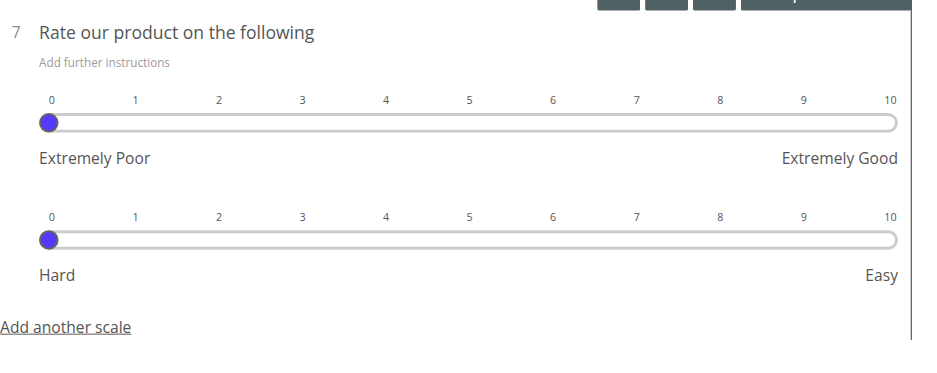 Much like the Multi-Factor Scale, this question type allows your respondents to evaluate a single question or statement through multiple sliders. In the question picker it’s labelled “Multi-Factor Opinion Slider”.
Under the hood, this is the same “Slider” widget used by the single Slider question type, just with a second slider already added and its Selection type set to Slider rather than Scale — you’ll see it labelled “Slider” once it’s on the canvas.
Why use a Multi-Factor Slider?
Section titled “Why use a Multi-Factor Slider?”Sliders are a powerful interactive tool that will keep your respondents engaged in your survey. They also allow you to collate multiple sub-evaluations of a single topic, by breaking down complex questions into several categories.
How do I create a Multi-Factor Slider?
Section titled “How do I create a Multi-Factor Slider?”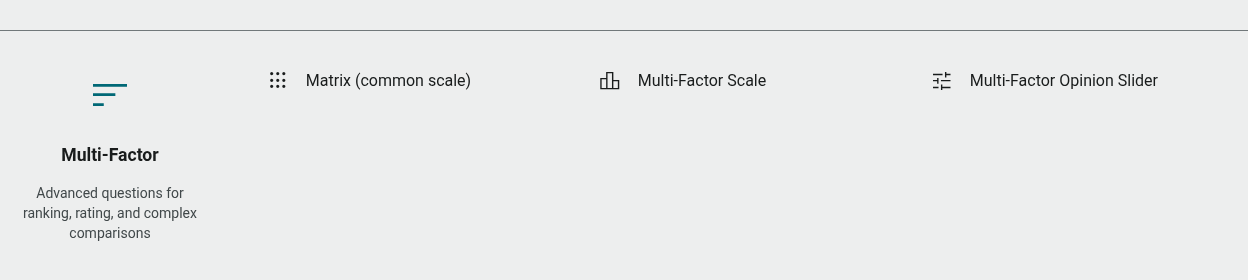
- Open the Build tab, and make sure you’re on the Questions tab in the sidebar
- Click + Question
- Select Multi-Factor Opinion Slider from the Multi-Factor category
- Enter your question text
- Click the text labels at either end of each slider to assign the extreme titles
Add Another Slider
Section titled “Add Another Slider”- Under the question, click Add another scale
This link is available on every Slider question, so you can turn a single Opinion Slider into a multi-factor one at any time — not just when starting from the Multi-Factor Opinion Slider shortcut.
Default Settings
Section titled “Default Settings”There will be two sliders present once you’ve inserted a Multi-Factor Slider into your project: one scaled from ‘Extremely Poor’ to ‘Extremely Good’, and the other from ‘Hard’ to ‘Easy’. These are easily changeable by clicking the text and inserting your own titles.
Settings like Required, Numbered, Selection type, and the range apply to the whole question — all of its sliders share the same range. There’s no Rating Heat Bar option for sliders.
Question Settings
Section titled “Question Settings”Click Show more settings under the question for the full set of options:
- Numbered: This button toggles the numbering for the concerned question.
- Required: By checking this box, respondents cannot finish the survey without completing the question.
- Selection type: Use this drop-down to switch between the scale and slider format — switching it to Scale turns this into a Multi-Factor Scale instead.
- Range start / Range end: Set the start and end range numbers for your sliders.
There’s no separate “Personal info” toggle for this question type — if you need answers tied to a respondent’s contact record, use one of the dedicated Contact Details question types instead.
How respondents interact with Multi-Factor Sliders
Section titled “How respondents interact with Multi-Factor Sliders”Participants will be able to drag the slider along the bar, or simply click the position they want the bar to be set in.
How to analyze the Quick Report?
Section titled “How to analyze the Quick Report?”On the left of your Data Table, you’ll find the titles of your extremes that correspond with the scales you provided in your slider. In the center will be your range of answer options, and then to the right, you’ll see statistics concerning standard deviation, number of responses, and weighted averages.
By default, your results use a diverging stacked bar chart, with both scale poles named. Use the question item’s chart menu to choose another available type.
Note: this reporting section was not re-verified in this pass.
For more detailed instructions on analyzing your report, you can visit either of these articles: